Custom TPE manufacturing for niche brands
Niche & Inclusive Adult Brands: Custom TPE Manufacturing for Specific Communities
Most factories quote from a catalog. A brand serving a specific community usually needs a product that does not exist in that catalog yet: a different length, a grip that suits a particular body, a firmness that fits a specific use, or a colour that reflects the people who will buy it. We work on those briefs. As a TPE manufacturer in Dongguan, Guangdong, with in-house mould making, injection moulding and assembly, we move a niche idea from sketch to sample without handing it between vendors.
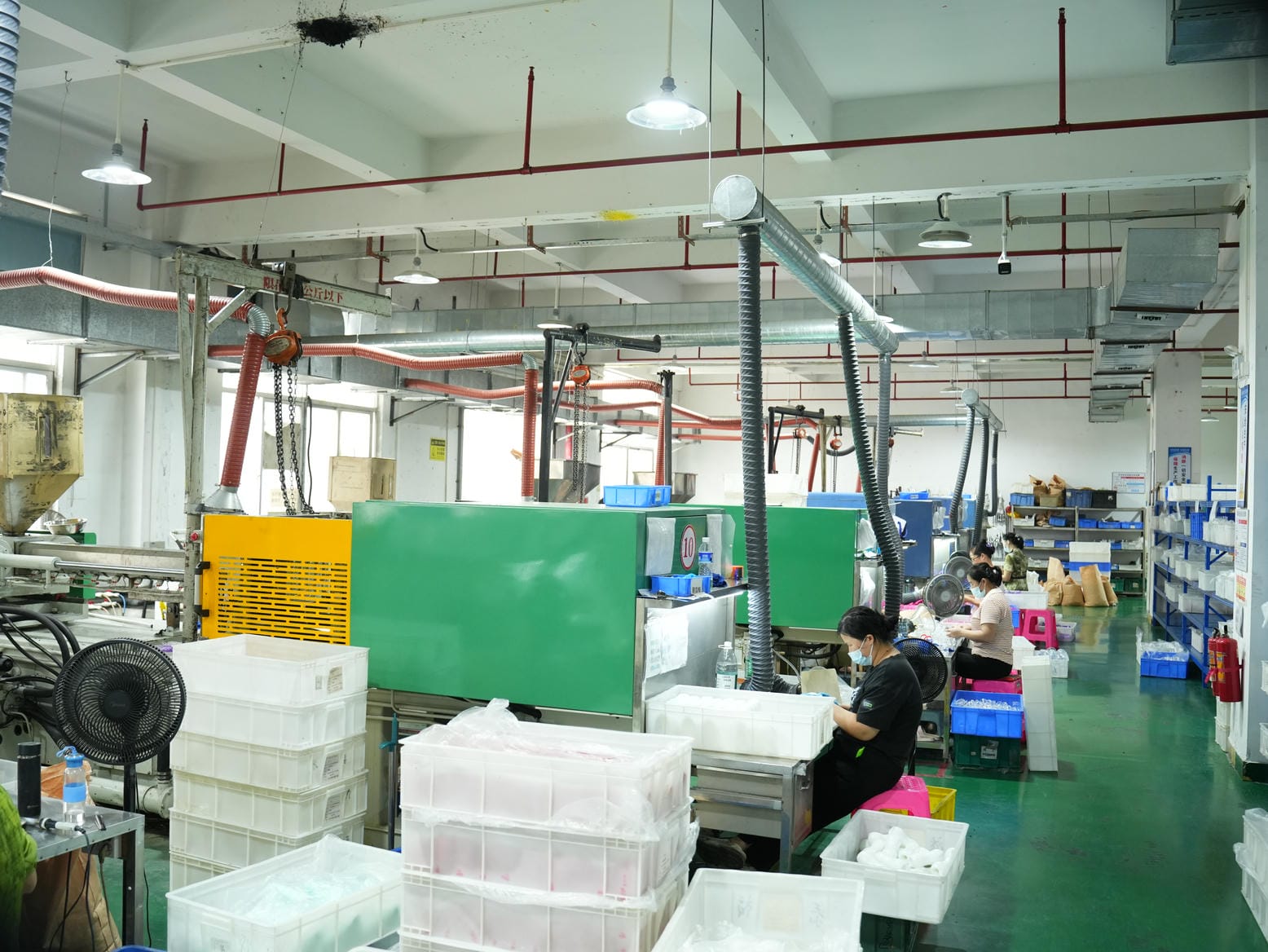
10
Injection moulding machines
2
EDM machines for in-house tooling detail
3
Mixers and three shredders for material prep
1
Mould-making machine plus a lathe, all in-house
How TPE moulding shapes a niche product
TPE (thermoplastic elastomer) is the material most of our adult product lines are built on. It is soft, skin-friendly and can be coloured and formulated across a range of hardness levels. Because it is a thermoplastic, it can be injection moulded at production volumes, and scrap from sprues and runners can be reground under controlled conditions.
For niche development, material choice affects more than feel. Wall thickness, undercuts, flexible sections and base design all depend on how the TPE flows and deforms on release. A design that looks correct in CAD can fail in the mould if a thin section cools unevenly or a deep recess traps air. We check these points before cutting steel, because a revision after tooling costs far more than a revision on paper.
| Compound direction | Feel | Watch-out |
|---|---|---|
| Softer (lower Shore A) | More yielding, gentle contact surface | Can lose shape around thin tips and bases |
| Firmer (higher Shore A) | Holds fine detail and structure well | Can feel less comfortable at the contact surface |
Most niche briefs need a compromise between the two. We settle it through physical sample comparison, not through specification sheets alone.
Custom sizing, structure and form
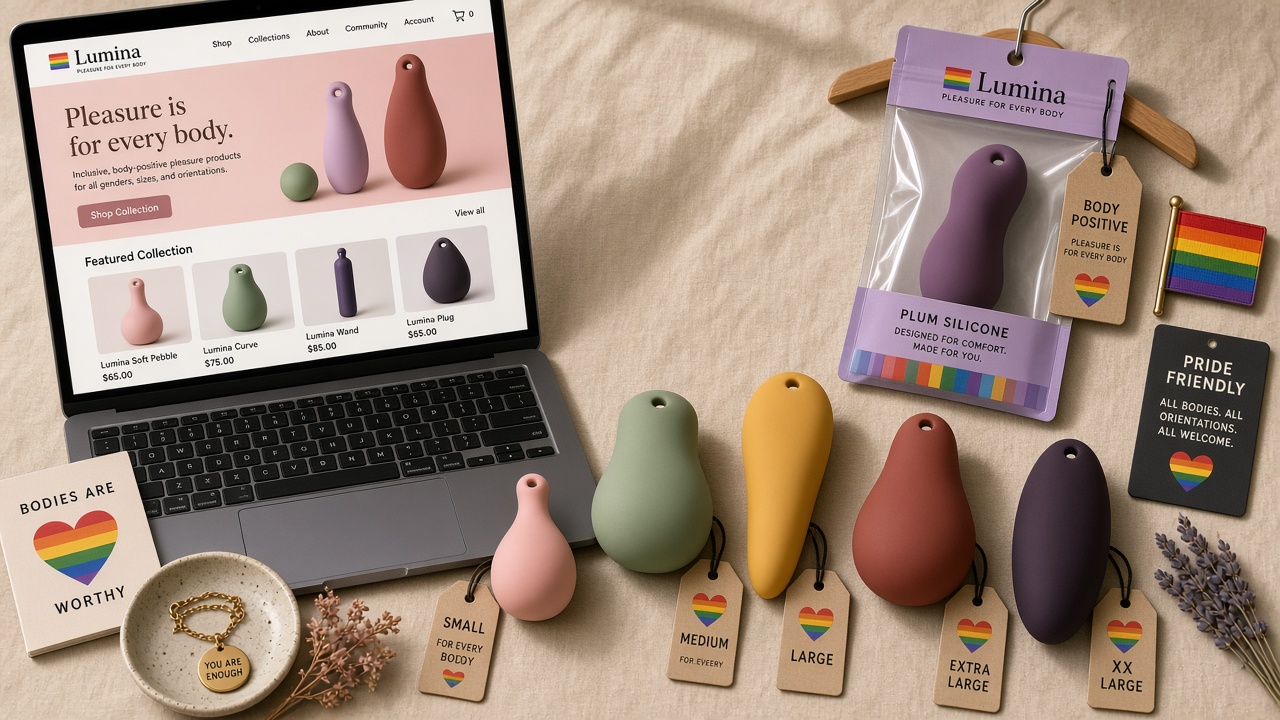
Standard catalog products are often designed around a single average body or a narrow set of assumptions. Brands serving LGBTQ+ communities, women-led companies and body-inclusive lines often need dimensions and forms the open market does not offer. We develop non-standard sizes and structures from customer drawings, reference samples or measurement data supplied under NDA.
- Diameter, length and taper adjusted to a defined user range rather than a generic average
- Base and flange geometry changed for handling, storage or harness compatibility
- Internal channels, ribbing or flex zones for a specific feel or use pattern
- Multi-part assemblies where a sleeve, insert or handle is moulded separately and joined in our assembly area
Every custom form is built as a prototype first. A 3D model is printed or machined, checked with the client and revised before any mould work begins, so most avoidable mistakes are caught early.
Colour, hardness and surface finish
Colour is a practical decision as well as a brand decision. Pigment loading affects base feel and batch-to-batch consistency, so we match against a physical swatch or Pantone reference and confirm the result on a trial batch.
Colour
Wide shade range, matched to your physical swatch or Pantone reference and verified on a trial batch.
Hardness
Test pieces at two or three hardness levels so you can compare them in hand. The chosen compound is recorded for repeat orders.
Surface finish
Glossy, matte and textured finishes are controlled at the mould surface, so the finish is part of the tooling from the start.
For two-tone or layered looks, we use multi-shot or insert approaches where the design justifies the added tooling cost. We tell you early if a requested effect is not economical at your volume.
Confidential development under NDA
Community research, user feedback, unreleased designs and branding decisions are sensitive. We sign a non-disclosure agreement before any drawing or measurement set is shared, store design files separately and never reuse project details for other clients.
-
Separate file storage
Design files are kept apart from other projects.
-
Stealth launch option
Packaging artwork and product names stay off shared documents until you decide to launch.
-
Agreed labelling
Sample labels, invoices and shipping paperwork are agreed before the first order.
-
Controlled visibility
Development can stay within a small group of people until you are ready.
Mould development and tooling options
Custom tooling is where niche products become commercially viable. Our in-house mould making covers design, machining, EDM work, polishing and trial moulding, so core and cavity details, texture transfer and cooling channel adjustments stay under one roof.
Single-cavity prototype mould
Validates form and feel before you commit to production tooling.
Best for: unproven designs and early sampling
Multi-cavity production mould
Used once a design is proven and order volume justifies the investment.
Best for: established lines with steady demand
Modified existing mould
A new size or detail is achieved by changing an insert, reducing cost and lead time.
Best for: size sets and detail variants
Lead time depends on structural complexity and the number of revisions. We estimate after reviewing your drawings and identify which features drive the cost. When the market is uncertain, we suggest a prototype mould or low-volume trial run before any full tooling investment.
Small-batch trials and iteration
Many factories will not run an order below a high minimum quantity. We accept small trial orders and run them on the same injection moulding lines as larger production, so the process stays consistent. A trial batch lets you check fit, colour, packaging and customer response before scaling.
For brands expanding into new sub-segments, we can run a series of short batches, each testing one variable. This keeps change costs under control and leaves a clear record of what was tested and why.
-
1
Trial batch
Short run on production lines to check fit, colour and packaging.
-
2
Joint review
We go through feedback with you and agree on the changes.
-
3
Tool or process adjustment
Insert, cooling or moulding parameters are refined as needed.
-
4
Second sample set
Revised samples are produced for another round of testing.
Traceability and production records
Batch records are kept for material lots and moulding parameters. When you need to investigate a complaint or repeat a successful run, the information is already there. Consistent compounds for repeat orders matter for brands that sell on reviews and repeat purchases.
Our capacity of 10 injection moulding machines, three mixers and three shredders supports both short trial runs and longer production cycles.
Certifications and export documentation
We can provide CE, RoHS, REACH and POPs documentation for TPE products, supporting compliance for buyers in Europe and the United States. Certificate scope depends on the specific material and product, so we confirm the required documents at quotation rather than after production begins. For private-label packaging, we can prepare instruction manuals and labelling text that match the documents provided.
- CE
- RoHS
- REACH
- POPs
Which projects suit this path
This approach fits brands and creators who need more than a catalog product. It is less suitable for projects that only need a generic item in a standard colour and size. In those cases a stock or lightly customised product is usually faster and cheaper, and we will say so during the initial review.
A strong fit for
- LGBTQ+ brands developing products around community-specific sizing or comfort
- Women-led brands designing around body ergonomics, material preferences and discreet packaging
- Body-inclusive brands needing a range of sizes and shapes beyond standard offerings
- Fetish, kink and other specialist brands with precise structural requirements
- Growth brands replacing ageing SKUs with a more distinct line
Better served by a stock product
- Projects that only need a generic product in a standard colour and size
- Launches that need the fastest possible availability with no development time
Starting a project with us
A useful first conversation does not require a finished design. Send what you have, and we return a feasibility note covering structure, material, likely tooling approach, sample timing and a staged cost outline. If the project makes sense, we propose the next step: a prototype, a trial run or a full development plan.
- Target user and needThe community you serve and the specific need the product should meet
- ReferencesSketches, reference products or measurements, shared under NDA if sensitive
- SpecificationsTarget dimensions, hardness preference and colour direction
- Volume and timingExpected first order volume and a rough timeline
- Market requirementsPackaging, labelling and certification needs for your market
Frequently asked questions
Co-create a Product for Your Community
Products for specific communities are built through close work between the brand and the factory. If your brand has a clear user group and a product need that existing catalogs do not meet, send us your brief. We will review it, discuss what can be made and how, and help you start with a sample you can test with the people it is meant for.
- Phone
- Factory address
For a faster response, include your brand name, target market and a short description of the product you have in mind.